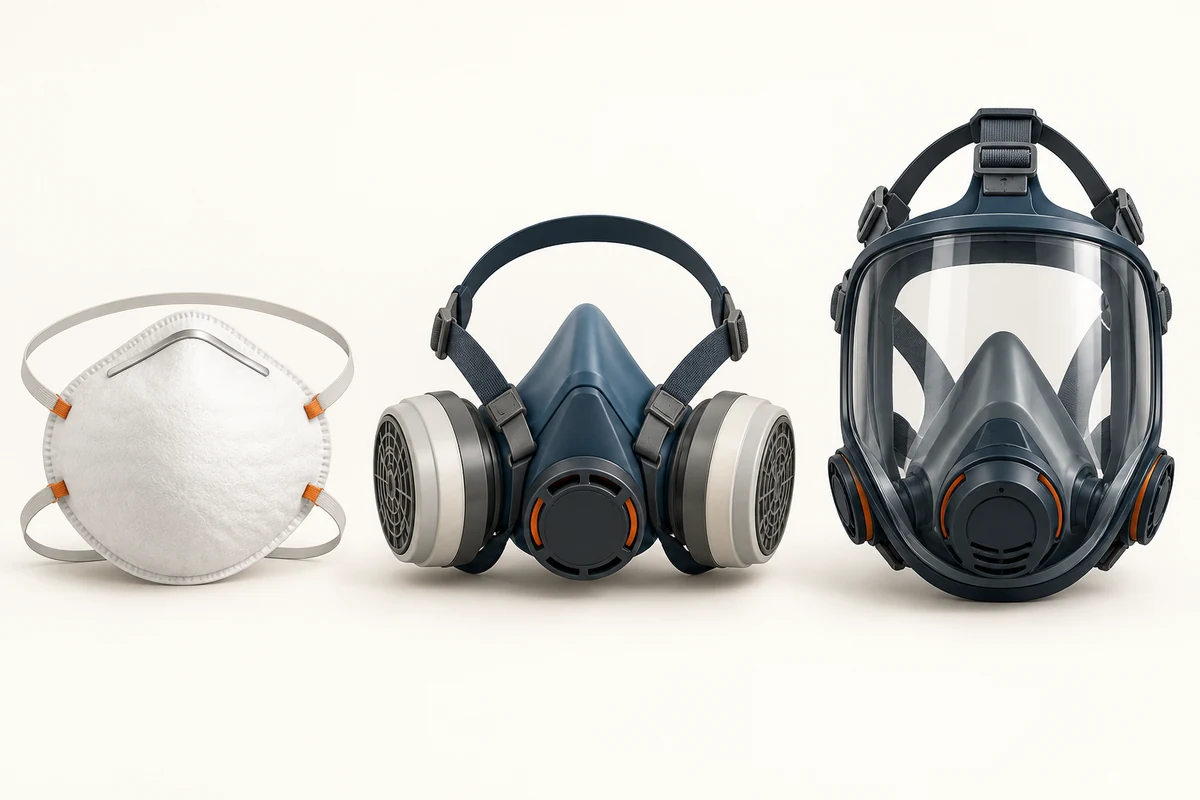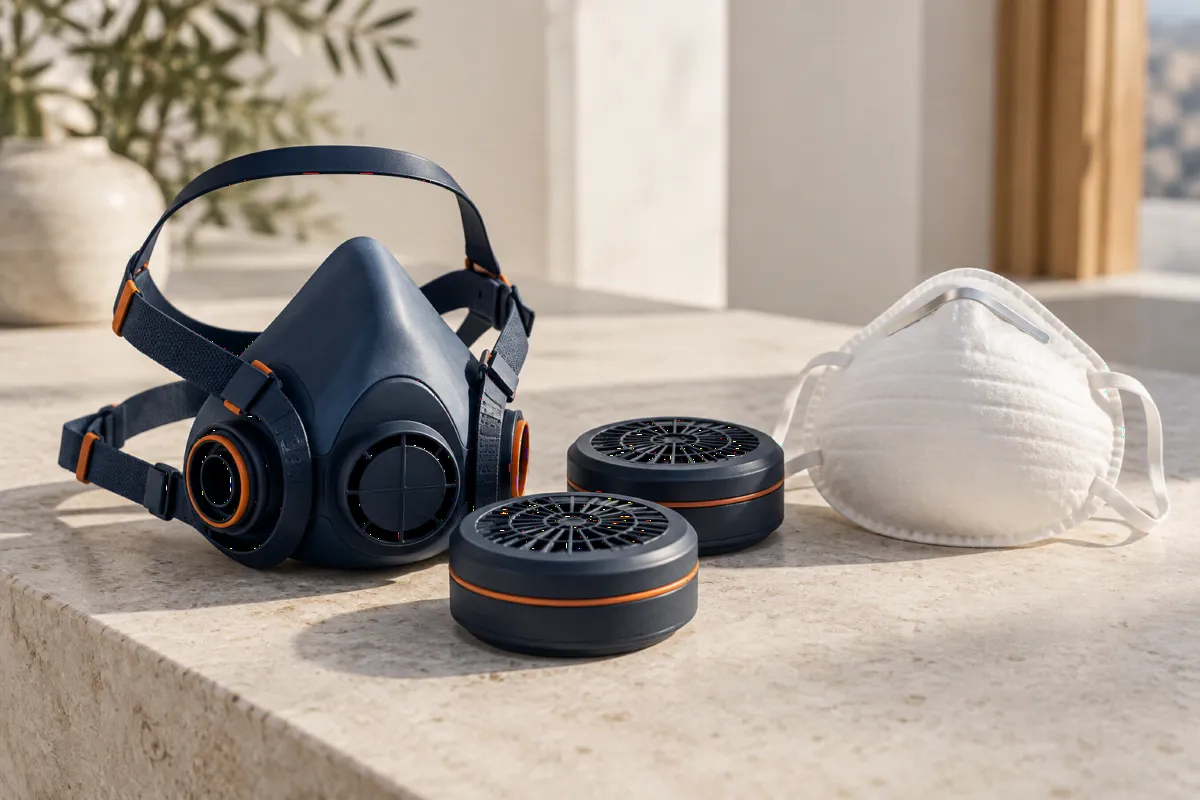
Particles, gases and vapours
Particle filters do not automatically protect against gases or vapours. Describe contaminants, known concentrations and conditions. Unknown or oxygen-deficient atmospheres require specialist assessment; a filtering device is not a default solution.
Identify facepiece and filter
EN 149 covers filtering particle half masks; EN 140 half masks; EN 136 full face masks; EN 143 particle filters; EN 14387 gas and combined filters. Check facepiece and filter references together and only use manufacturer-approved combinations.
FFP and P are different
FFP1, FFP2 and FFP3 classify filtering half masks; P1, P2 and P3 classify replaceable particle filters. A class marking alone does not establish protection achieved by an individual. Face fit and instructions are critical.
Fit, use and replacement
Selection requires workplace assessment and fit evaluation for tight-fitting facepieces. Facial hair in the sealing area can interfere with fit. Replace filters under an appropriate programme and manufacturer instructions, not a universal duration or smell alone.
Documents for your enquiry
Send defined requirements, relevant safety data sheets and current equipment references. Include duration, workload, other PPE and care. This guide explains families; it does not prescribe a device for a given atmosphere.