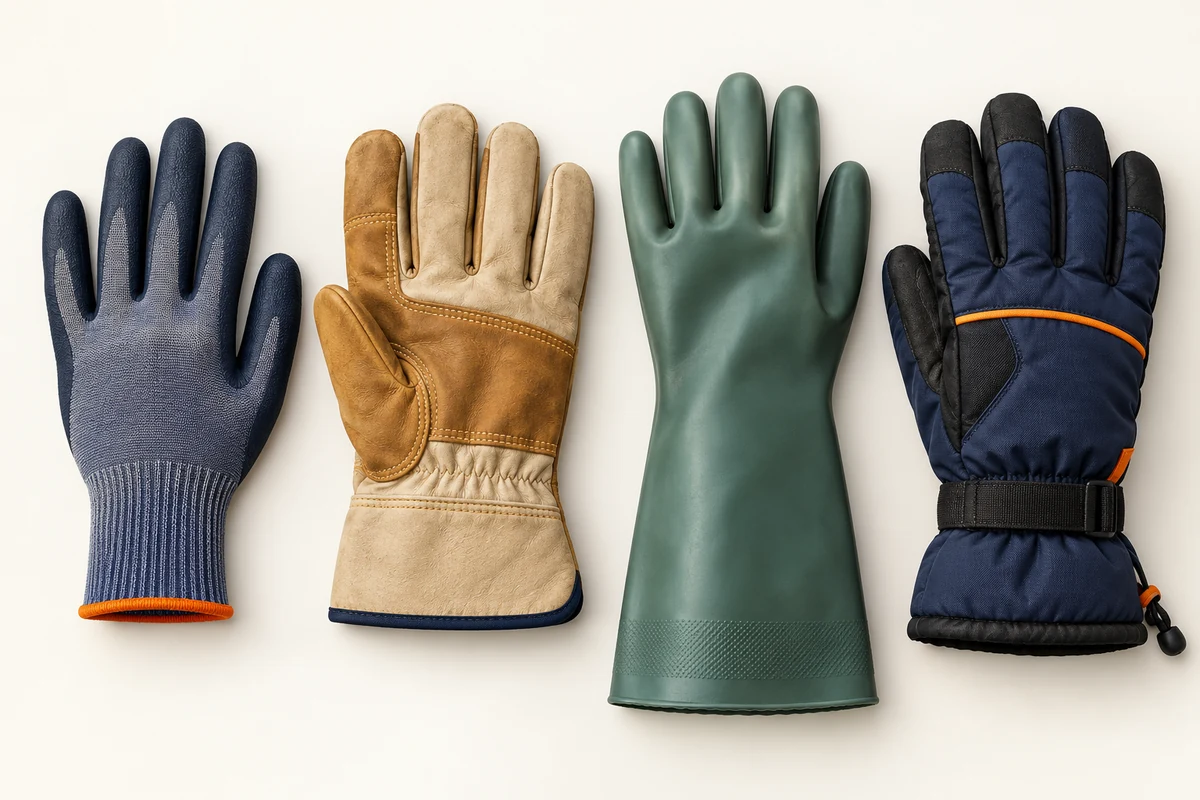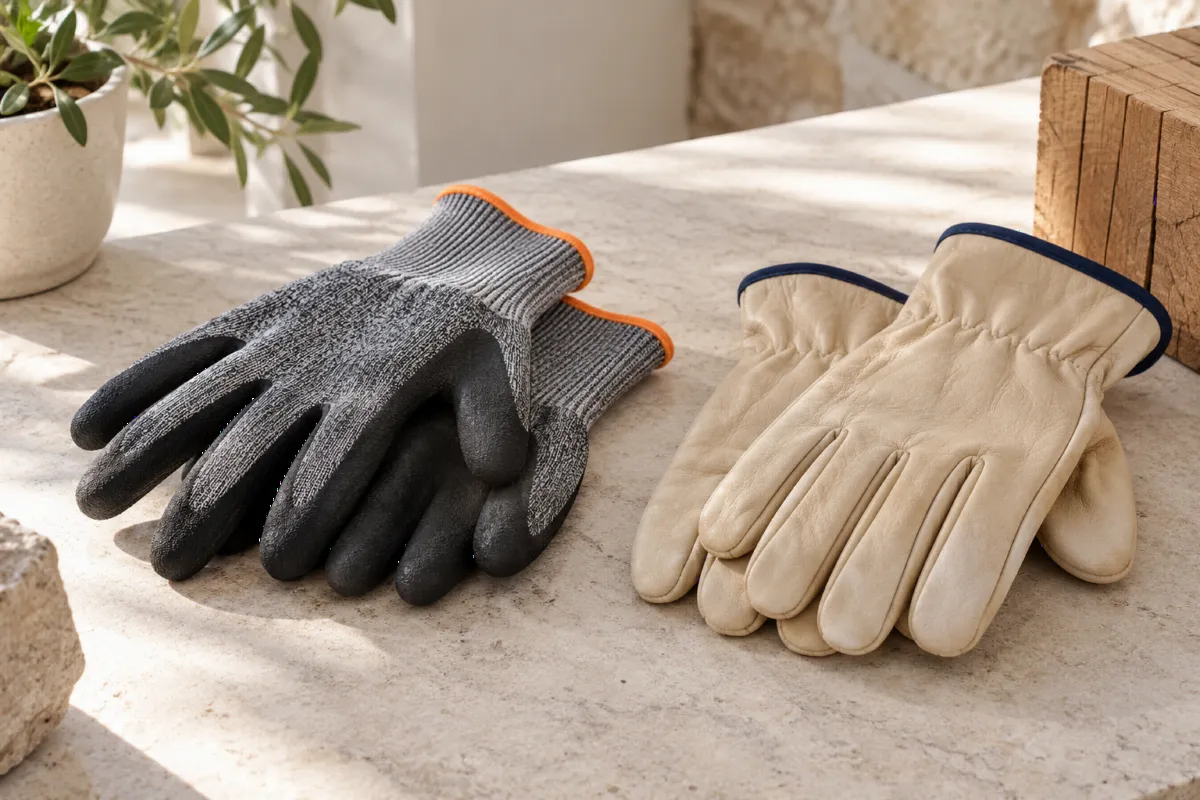
Different glove families
Handling gloves are not automatically suitable for chemicals, cold or heat. Describe handled parts, sharp edges, liquids, contact time and dexterity. A model may meet several tests without covering every hazard.
Understand the references
EN ISO 21420 covers general requirements, not a specific protective claim on its own. EN 388 addresses mechanical hazards; EN ISO 374-1 and 374-5 chemicals and micro-organisms; EN 407 heat and flame; EN 511 cold. Check the model's edition and results.
Read mechanical markings
EN 388 marking positions relate to different tests, including abrasion, cutting, tearing and puncture. The cut-resistance letter is not read on the same scale as preceding numbers. X is not the highest performance: consult the instructions for an untested or inapplicable criterion.
Chemical exposure
The word nitrile is not enough. Identify substance and concentration, then examine manufacturer permeation, degradation and test-condition data. Laboratory results must not be converted into a guaranteed workplace wearing time.
Prepare an equipment enquiry
Send the task, assessed hazards, sizes, quantities and current references. For chemicals, attach the safety data sheet. Include grip, lining, length and compatibility requirements.
Describe contact and dexterity
Dry cartons, oily components and chemical cleaning raise different questions. Record what touches the hand, how often and how much precision is needed. These are examples for describing a task, not universal glove recommendations.