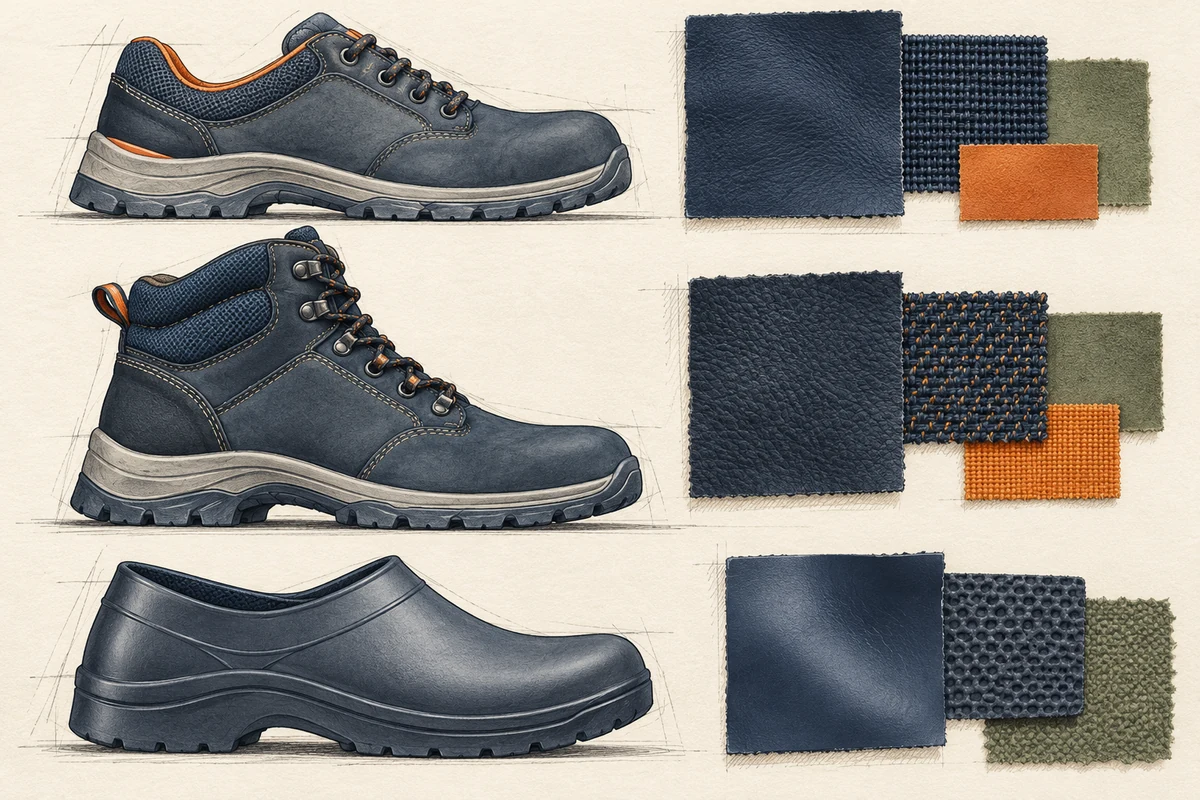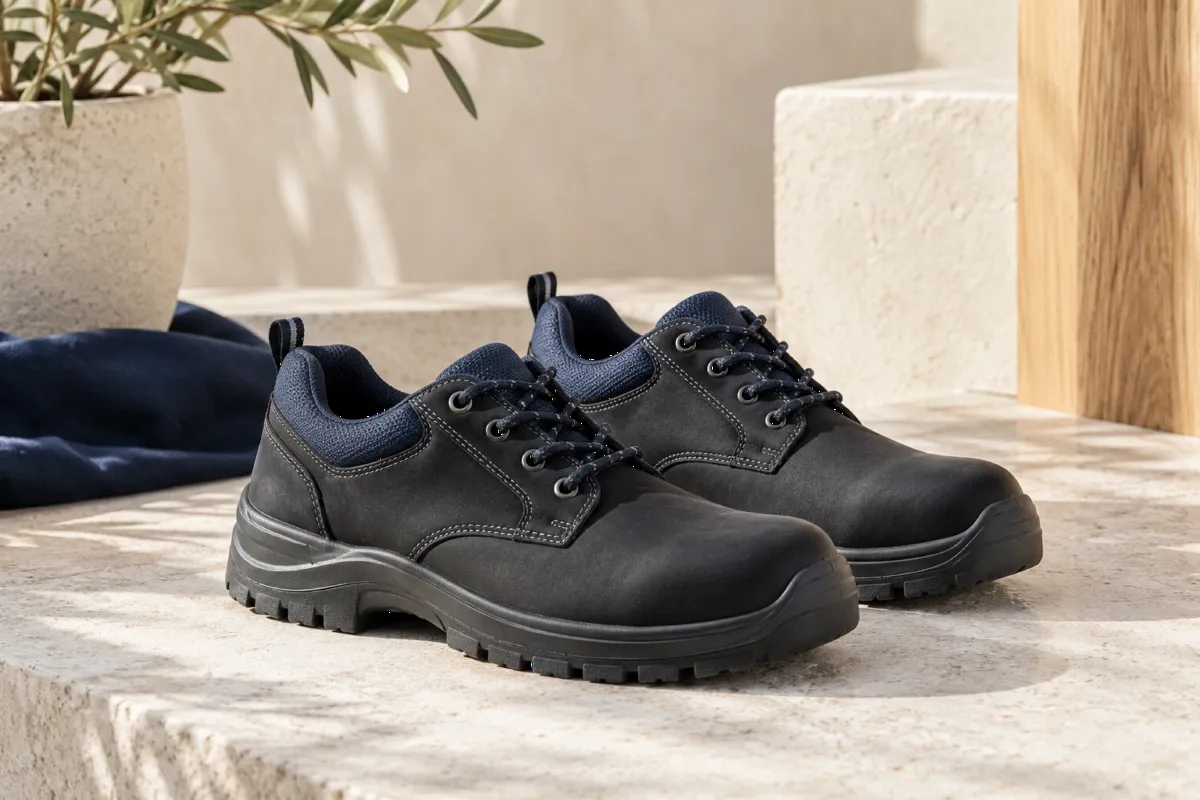
Occupational or safety footwear?
EN ISO 20345 safety footwear and EN ISO 20347 occupational footwear address different needs. The former includes toe protection; the latter is occupational footwear. Identify the workplace hazard before comparing low shoes, high shoes, boots or clogs.
Classes and additional markings
S1, S2 and S3 must be read with the standard edition and other markings. Editions change some tests and designations: retain the year when comparing labels. For slip, puncture or water properties, read model-specific documentation rather than judging the sole.
Fit and adaptation
Check heel support, toe room and use with normal work socks. Added insoles or replacement components can change performance: follow manufacturer-approved adaptations. Size alone does not define fit.
Information to request
Record manufacturer, model, sizes, standard edition, additional performance, instructions and applicable declaration. Describe flooring, moisture, walking, loads and assessed constraints. Any special protective property needs evidence for the proposed reference.
Describe floors and movement
Record floor conditions, walking, standing, vehicle use and assessed impact or penetration hazards. A marketing name or shoe height cannot establish suitability. Read the category together with the standard edition, additional markings and instructions.