Kitchen uniform care: organising garment rotation
Having a clean uniform ready for a shift also depends on collection, laundry and return checks. Use this method to organise rotation without applying one washing programme to every garment.
4 min read Équipe Vetiwork

Contents
Kitchen uniform care involves more than selecting a washing programme. A suitable jacket may still be unavailable at the start of a shift because it has not been collected, checked or returned to the right person. For restaurants, central kitchens and groups operating several sites, the laundry circuit therefore belongs in uniform allocation planning.
The method below helps you organise that circuit. It does not replace garment instructions or your establishment’s hygiene procedures. No washing temperature or cleaning frequency is suitable by default for every garment, fabric and type of personalisation.
Connect kitchen uniform care with actual work
Start by describing the roles: preparation, cooking, dishwashing, service or reception. Record the garments used, the changes required during the day and how teams take over from each other. Providing exactly the same allocation for every role may complicate storage or leave certain staff without a replacement.
Identify responsibilities as well. Does one person collect items, another manage the laundry provider and a third distribute the returned garments? Write down these handovers. The purpose is to locate an expected item and know who can resolve a shortage. A simple table can work when everyone understands the responsibilities.
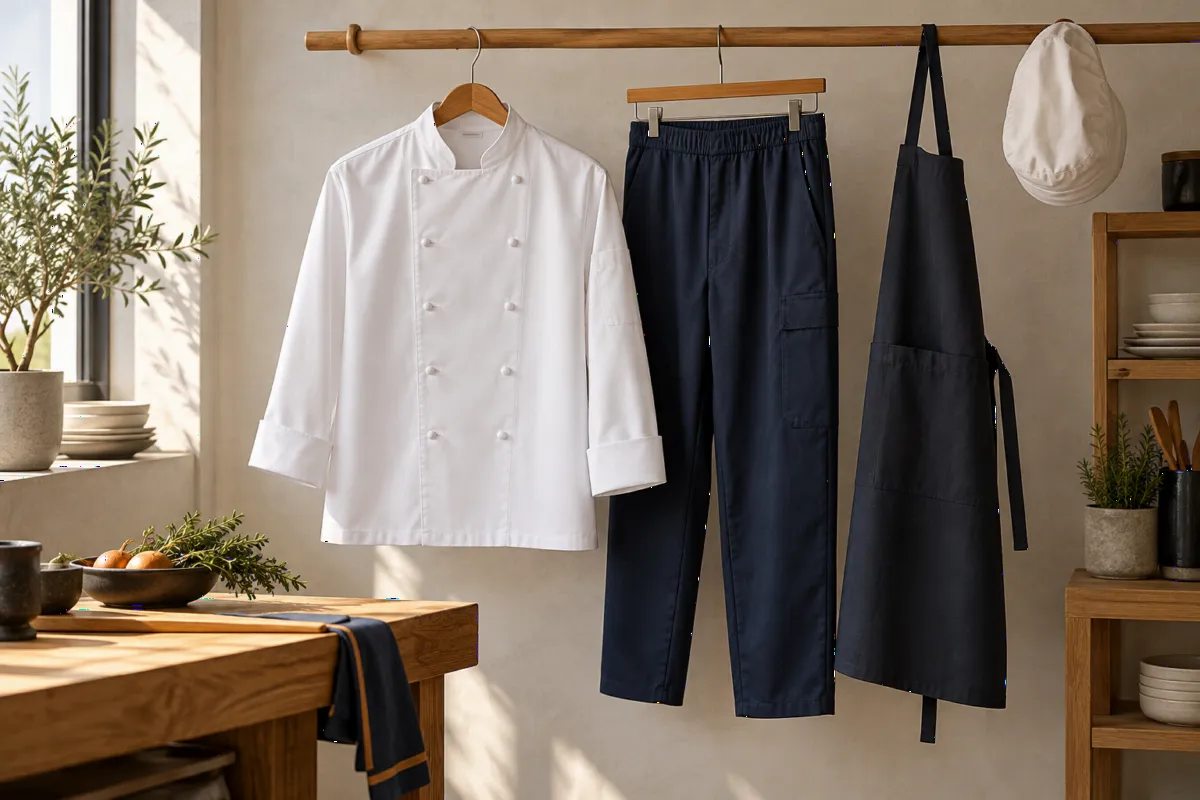
Select garments alongside this planning. Explore our kitchen uniforms for your requirements. Different roles may need different pieces even when the team shares a common visual identity. This article focuses on making those pieces available again after cleaning, rather than selecting a single apron style for every task.
Keep the instructions for each garment reference
Collect the labels and instructions provided for the garment, its accessories and its personalisation. Similar appearance does not mean two references tolerate the same treatment. Request clarification if information is missing or appears inconsistent before defining a shared programme.
The GINETEX care-symbol reference explains that the number inside the washtub gives a maximum temperature, while bars underneath indicate gentler mechanical treatment. This helps interpret a label; it is not a washing prescription for your kitchen.
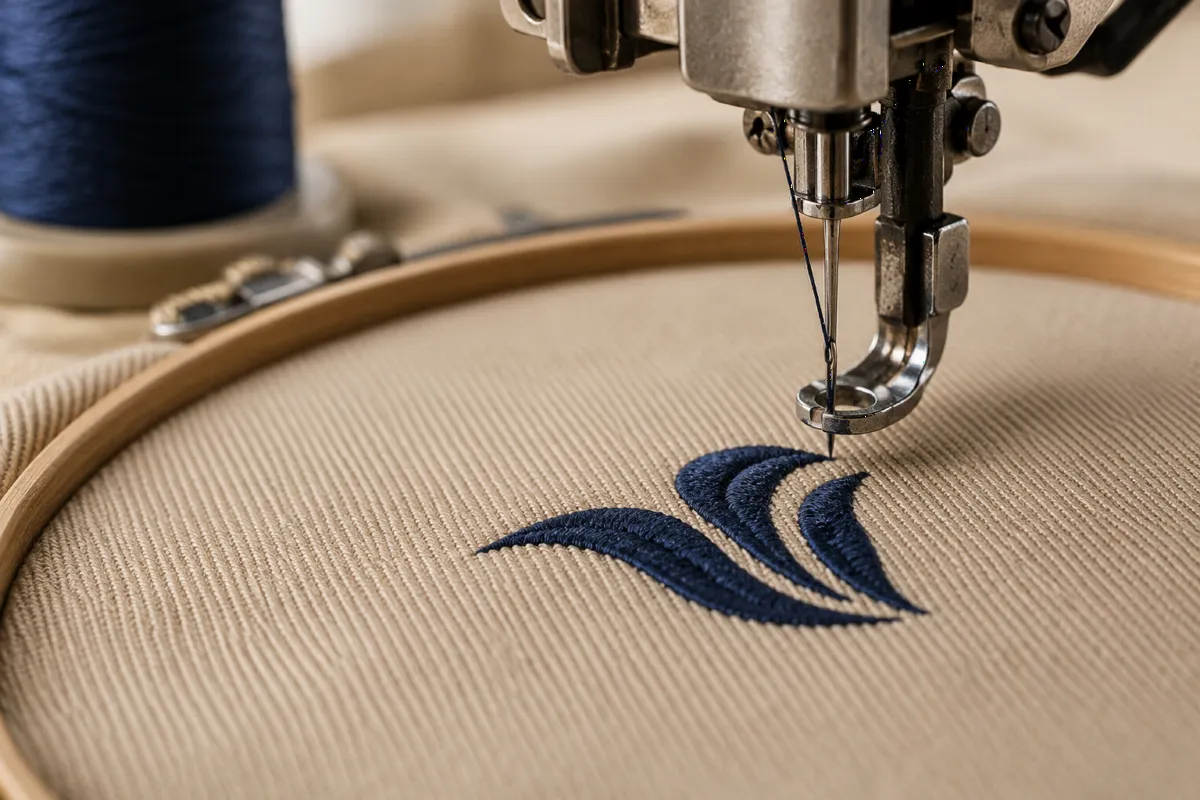
For personalised garments, confirm conditions that are compatible with both the garment and the selected marking. A photograph of a logo cannot establish its washing performance. Our uniform personalisation page helps you prepare points to discuss with Vetiwork without assuming one technique suits every textile.
Describe the laundry route and keep stages distinct
Set out an understandable sequence: issue, use, collection, cleaning, return check and storage. Identify the locations for each stage according to your organisation and its procedures. Staff must be able to distinguish clean items from those awaiting treatment.
If an external provider is involved, clarify collection days, item counts and how discrepancies are reported. Confirm the actual arrangements rather than basing your allocation on an assumed turnaround. Across several sites, retain identification that returns the correct references to the correct teams.
| Stage | Information to record |
|---|---|
| Collection | Site, reference and quantity handed over |
| Return | Quantity received and discrepancies |
| Check | Available, awaiting repair or replacement |
| Storage | Size, allocation and location |
This table is a suggested organisational aid. It is not a statutory register or a certified hygiene procedure. Adapt the fields to your establishment and check that staff actually complete them throughout one full cycle. An unfinished record cannot reliably explain where an item has gone.
Check returned items before putting them back into use
Before storage, arrange a visual check of seams, closures, attachments and markings. Separate items with a defect requiring examination. An item counted as returned but unusable must not appear as available in the internal record.
Record the reason for withdrawal in simple terms: unsuitable size, faulty fastening, missing item or a point needing verification. This helps distinguish allocation problems from collection problems. It also avoids automatically ordering more uniforms when existing garments are simply held at the wrong stage.
To assess rotation, observe the actual time between collection and availability, the changes required by each role and the shortages encountered. There is no universal number of garments to buy per employee. Define the reserve according to these constraints and your organisation’s instructions.
Prepare a consistent allocation and quotation request
Provide staffing numbers by role, sizes, preferred references, laundry arrangements and replacement needs. Add personalisation requirements and any points still to be confirmed with the provider. An agreed trial using the selected pieces can help assess suitability for the planned process before a substantial order, without assuming a successful outcome in advance.
Vetiwork manufactures and personalises workwear. Allocation projects are assessed through a quotation; this method assumes no particular stock, lead time or price. Use the Vetiwork quotation request to send a structured brief. You can then discuss the garments and their actual use with the relevant constraints identified from the beginning.
Frequently asked questions
- What temperature should kitchen uniforms be washed at?
- Follow the garment and personalisation instructions together with the procedures appropriate to your establishment. This article recommends no universal washing programme.
- How many uniforms should each employee receive?
- The quantity depends on required changes, actual laundry turnaround and unavailable items. Observe a complete cycle before defining the reserve.
- Do personalised uniforms need the same care?
- Confirm conditions compatible with the fabric, accessories and marking. A logo photograph cannot establish those conditions.