Choosing an apron for service, a café or a kitchen
Bib or waist apron: start with the role. Review fit, pockets, fastenings, care and branding before preparing your team’s workwear enquiry.
4 min read Équipe Vetiwork
Contents
Choosing an apron for service, a café or a kitchen starts with the job. A person welcoming guests, a server moving between tables and a cook preparing dishes do not use their clothing in the same way. Before choosing a colour, consider what each team member needs to do, carry and adjust during a shift. A useful enquiry describes the working day as well as the appearance you would like.
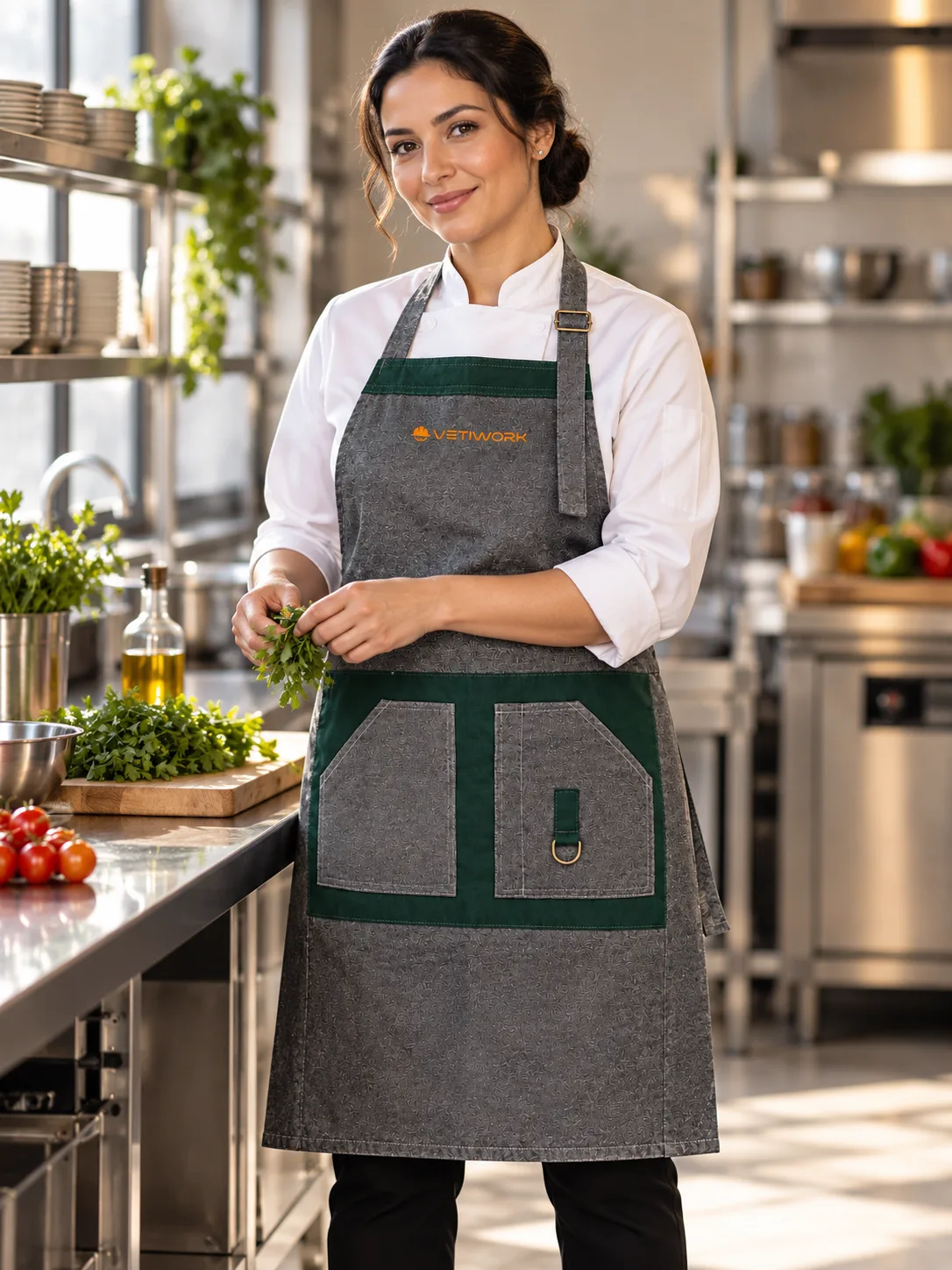
Start with everyday movements
List practical situations: bending, reaching a shelf, carrying a tray, working behind a counter or standing at a preparation station. An apron needs to allow the movements required, with a length suitable for the wearer and the role. Try the proposed model while standing, while sitting if the job requires it, and while moving. A good photograph alone cannot establish how comfortably a garment will fit.
In a café, observe the movement between the coffee machine, the counter and the tables. For table service, check how the garment follows walking and changes of position. In food preparation, consider access to the work surface. These observations provide specific points for discussing the cut instead of choosing solely from a drawing or a photograph.
Choosing an apron: bib or waist style?
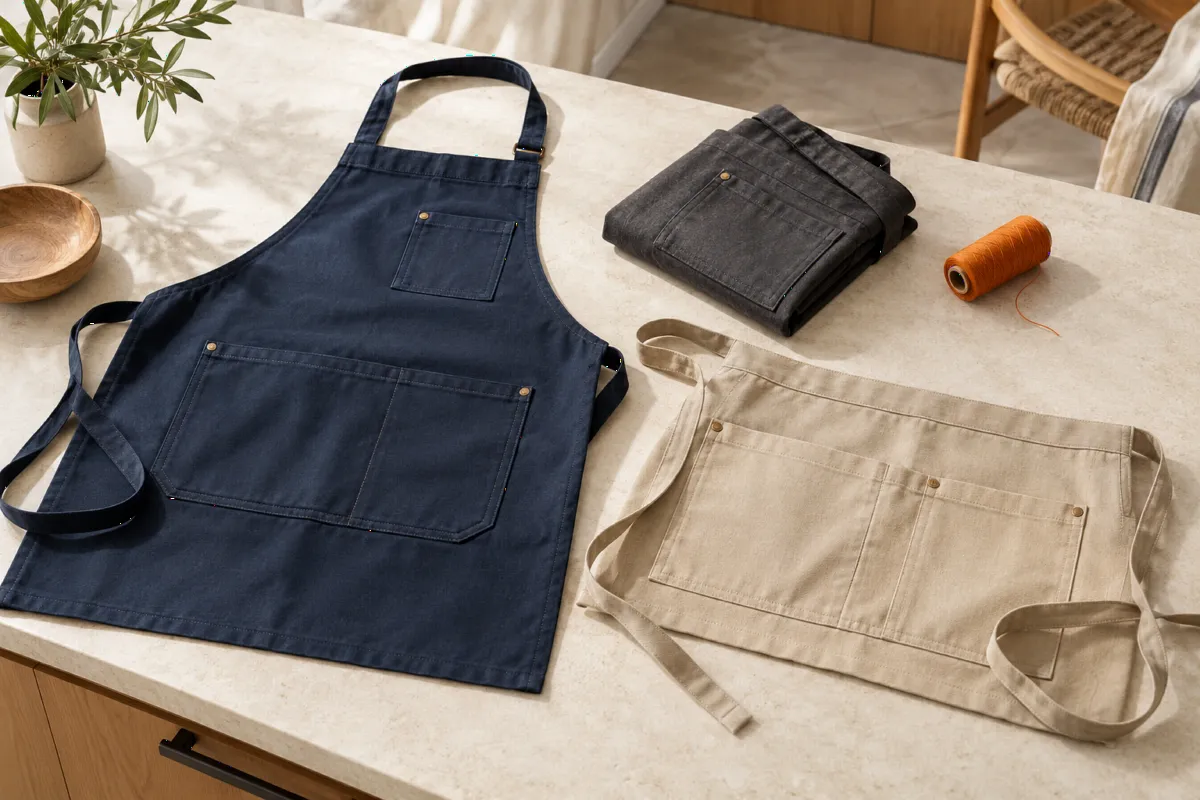
A bib apron covers the front of the torso and extends over part of the legs. It can contribute to the appearance you want at a counter or preparation station. A waist apron ties around the waist and leaves the upper garment visible. It may suit a service uniform designed to show a shirt or polo.
The format alone does not determine suitability. Check length, width, fabric and the actual tasks, and compare proportions on several team members. These ordinary work aprons are not presented as guaranteed protection against heat, cuts or chemicals. Explore the professional apron range to discuss the possibilities before specifying the style you would like.
Examine pockets and fastenings
A pocket is useful when its contents remain accessible without obstructing movement. Specify what it needs to hold, such as a notebook, a pen or a small service accessory. Then compare its depth, position and any closure. Avoid adding pockets simply for appearance. Also check that the items being carried are consistent with your establishment’s working procedures.
Fastenings deserve a separate review. Depending on the model, a neck strap may be fixed, adjustable or connected through a particular attachment. Check waist ties and attachment points on the exact model proposed. A detail shown on one variation does not automatically apply to every other variation. Ask for a close view of the fastening if it is an important selection criterion.
Choose materials alongside care requirements
Request the composition and care instructions for the version under consideration. If it includes PVC or leather-look panels, confirm the exact nature of those elements and the compatible cleaning method. A commercial name or appearance does not establish that a material is genuine leather or that it tolerates the same washing process as a plain textile apron.
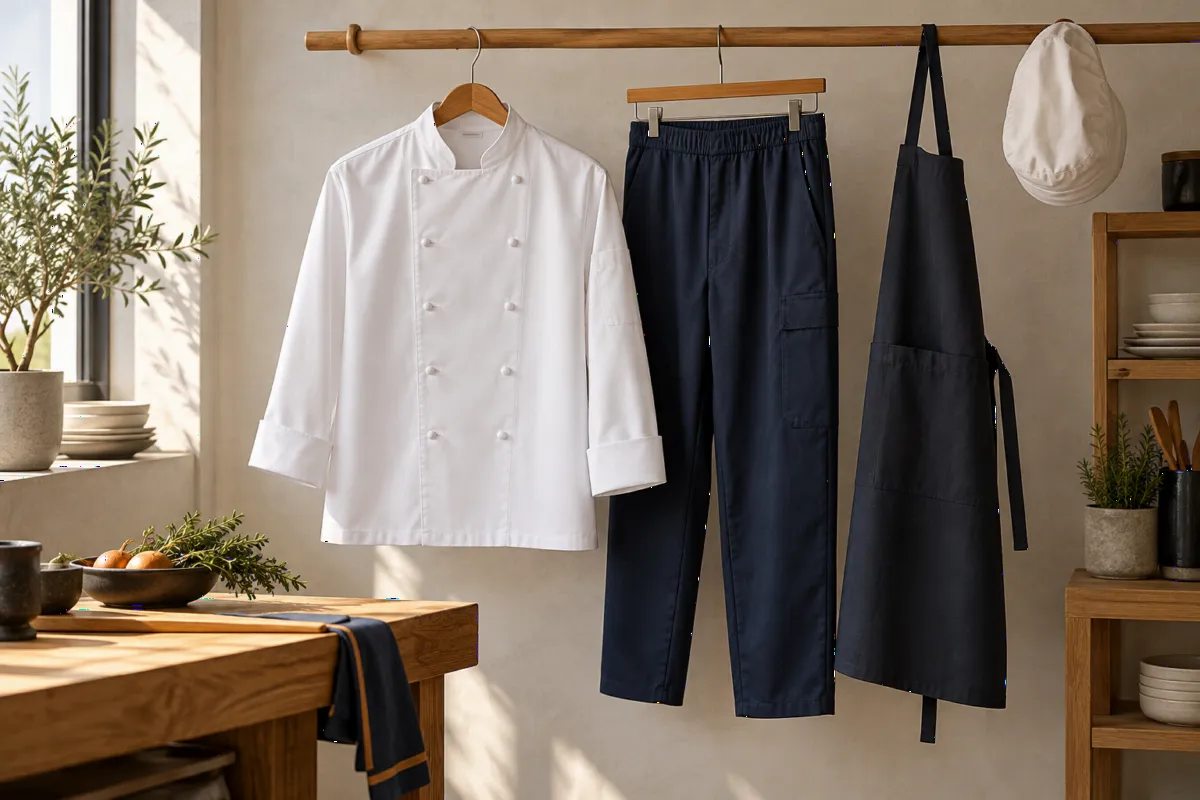
Changing frequency and laundry arrangements also matter. Plan enough garments to allow rotation, then discuss quantities with the commercial team according to your operation. Share the requirements of your usual cleaning process before selecting a variation. Consider the apron alongside the rest of your chefwear to prepare a coordinated outfit.
Keep a consistent team identity
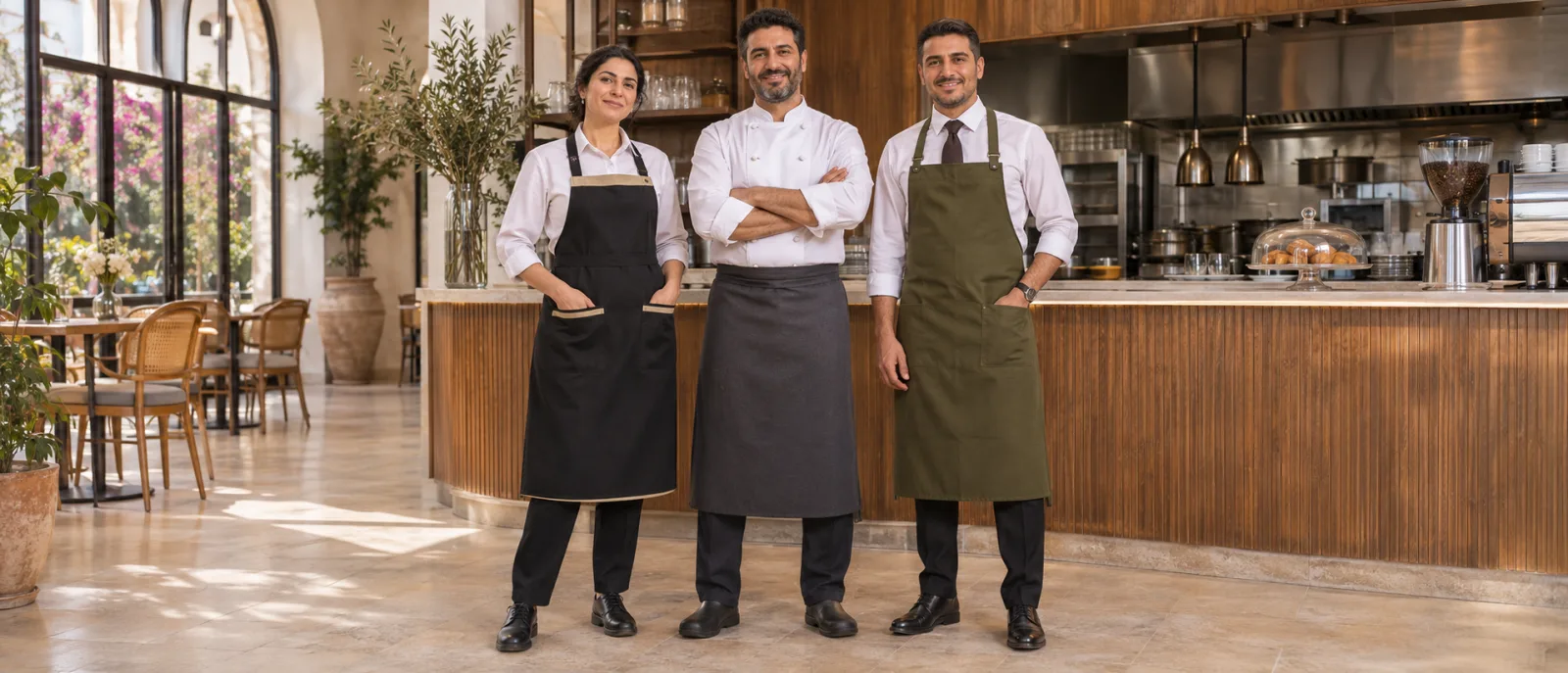
A team can wear several styles and still be recognisable. You can select a common base colour with different contrasting panels, use a colour from the logo, or distinguish roles through a limited palette. The aim is a recognisable team appearance that still accommodates the needs of each position.
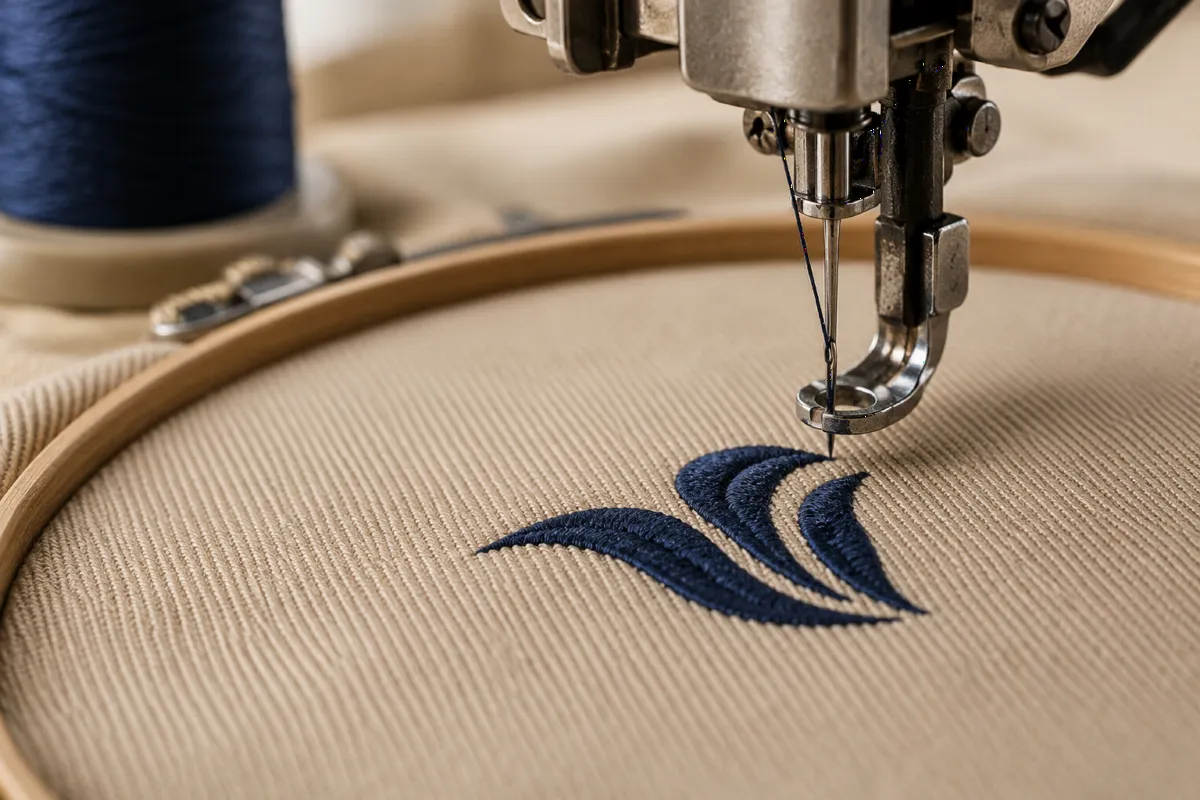
Plan branding together with the garment: placement, dimensions, contrast and compatibility with the material. A logo placed too low may be hidden by a pocket or fold. Review the garment personalisation options and provide your logo file. Confirm the finish, technique and dimensions on the selected model. A visual representation does not replace approval of those details for your project.
Prepare an enquiry before every detail is decided
For your restaurant, café or hotel, gather information that explains the project:
- the roles involved and estimated quantities;
- the preferred format, or simply the movements to accommodate;
- the objects that pockets need to hold;
- colours and the logo file;
- your cleaning arrangements;
- a photograph, list or document describing the requirement.
If you are comparing several versions, distinguish essential requirements from preferences that remain open. Vetiwork manufactures and personalises workwear in Ksibet el-Médiouni, Tunisia. The team can develop your enquiry and suggest choices for discussion without requiring you to select a precise reference immediately. Materials, colours, attachments and personalisation options must be confirmed for each project. Send your quotation enquiry with the information you already have.
Frequently asked questions
- Can we request a quote before selecting a model?
- Yes. Describe the roles, estimated quantities and working requirements. A photograph or document can help the team develop your enquiry.
- Are fastenings identical on every apron?
- No. Check the neck strap, waist ties and attachments on the proposed model. A detail shown on one variation does not apply to the whole range.
- Can we add our establishment’s logo?
- Personalisation is considered according to the material and selected model. Provide the logo to discuss placement, dimensions and a suitable marking technique.
- How should we select an apron with leather-look details?
- Ask for the exact composition of the panels and their care instructions. Appearance alone does not establish the material or a compatible cleaning process.